Search behaviour is shifting faster than most brands realise. People no longer skim ten blue links and stitch answers together. They expect clarity, relevance, and depth in a single experience.
This change has pushed content teams to look beyond traditional optimisation and focus on how language itself is understood. That is where perplexity comes into play.
Our experts at RepIndia see perplexity as a practical content discipline rather than an academic metric. It influences how blogs rank, how landing pages convert, and how thought leadership earns trust.
Perplexity measures how predictable a piece of language is within a given context. In simple terms, it reflects how easily a reader or an intelligent system can follow what is being said.
Content with extremely low unpredictability feels flat and generic. Content with high unpredictability feels confusing or unfocused. Strong digital content sits in the middle.
This balance is what Perplexity optimisation aims to achieve. Clear structure, logical progression of ideas, and familiar language patterns help systems interpret content accurately. Fresh insights, strong points of view, and original framing keep human readers engaged.
Search engines and large language models both reward this balance, even if they do not label it in these exact terms.
Search engines rely on advanced language systems to assess relevance and quality at scale. These systems evaluate coherence, topical depth, and how well a page aligns with intent. Content that jumps between ideas, overuses jargon, or hides the main point behind clever wording creates friction.
Lowering unnecessary complexity improves how content is parsed, summarised, and surfaced. This is especially important as generative answers become a primary discovery layer. Pages that read cleanly and stay on topic are easier to trust.
This shift is driving what many now call Perplexity SEO, a practice that prioritises semantic clarity over mechanical keyword placement.
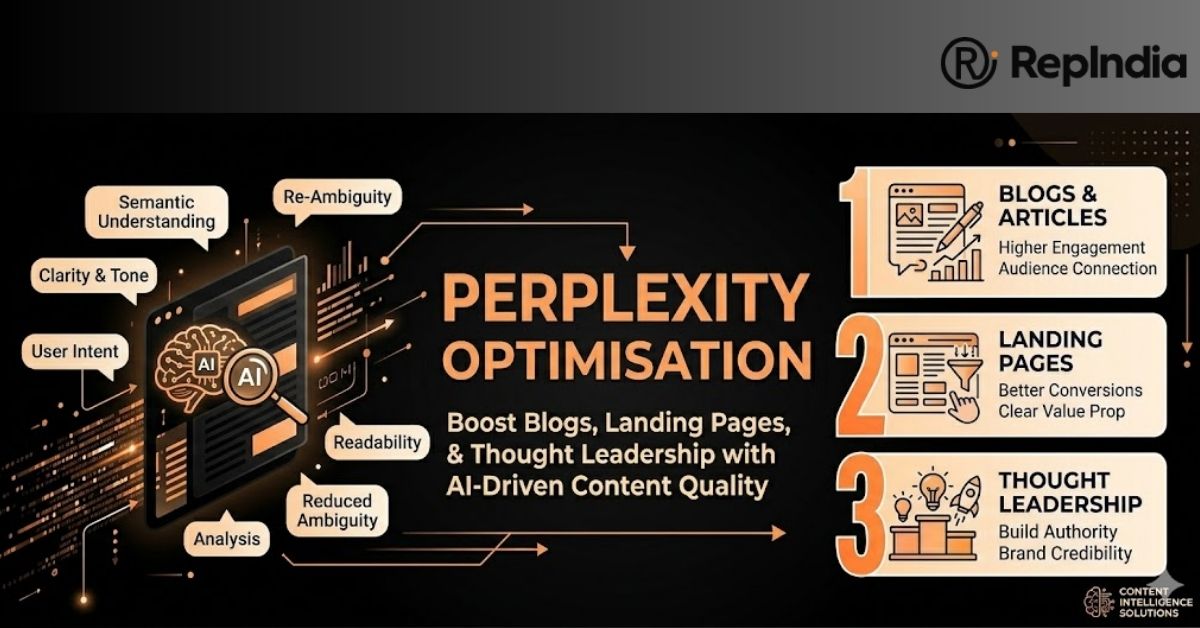
Blogs remain the backbone of organic visibility. Their role has expanded from traffic drivers to knowledge assets that train search systems on brand expertise.
Effective blog optimisation starts with intent. Each section needs a clear purpose and a logical connection to the next.
Concepts should be introduced before they are expanded. Examples should reinforce points instead of distracting from them.
Predictable structure helps. Direct headings, concise paragraphs, and consistent terminology reduce friction. Original analysis raises value. Readers stay longer when they feel guided rather than tested.
High-performing blogs often sound conversational but deliberate. They answer questions in the order a reader would ask them. That flow lowers cognitive load and improves comprehension signals.
Landing pages live under different pressure. Visitors arrive with a specific goal and limited patience. Confusing language or abstract positioning leads to drop-offs.
Perplexity optimisation for landing pages leans heavily towards clarity. Headlines should state the value clearly. Supporting copy should explain how that value is delivered. Calls to action should feel like a natural next step rather than a hard sell.
This does not mean generic copy. It means controlled language choices. Each sentence should move the reader closer to understanding or action. When language feels effortless to process, conversion rates improve.
Teams operating as an AI SEO Agency often see this impact early because they test content against both human behaviour and machine interpretation.
Thought leadership carries a different responsibility. The goal is to shape perspective, not chase clicks. Original thinking matters, yet structure remains critical.
Strong thought leadership usually follows a recognisable pattern. It frames a problem, explains the current landscape, introduces a distinct point of view, and supports it with experience or evidence. This predictability helps readers stay oriented while absorbing new ideas.
Perplexity rises naturally when insight is introduced. That is healthy. What matters is grounding that insight in clear language and logical sequencing. Readers should feel challenged, not lost.
Content that balances familiarity with originality often becomes a reference point for both audiences and search systems.
Large language models learn from patterns. They reward content that demonstrates consistency, topic focus, and natural language flow. Pages that wander or overload keywords send mixed signals.
This is where Perplexity optimisation LLMs become relevant. Content written with semantic discipline is easier for models to summarise, cite, and surface in generated answers. It aligns with how modern retrieval systems interpret authority.
Writers do not need to think in equations. They need to think in terms of guidance. Every sentence should help someone understand something slightly better than before.
Perplexity optimisation works best as a system, not a one-off exercise. Planning matters as much as writing. Clear outlines, defined takeaways, and editorial review focused on flow make a measurable difference.
Reading content aloud often reveals issues faster than tools. If a sentence feels awkward to say, it is usually hard to process as well. Tightening language without stripping personality improves both engagement and interpretability.
Our teams have seen consistent results when content creators align with these principles early in the process.
Brands navigating this shift often need support that blends strategy, language, and technical understanding. An experienced SEO Agency India operates within this intersection, aligning editorial decisions with evolving search behaviour.
Our approach centres on building content ecosystems that age well. We focus on clarity, intent alignment, and insight depth rather than chasing fleeting tactics.
This mindset allows blogs, landing pages, and thought leadership pieces to perform across search, discovery platforms, and generative environments.
Perplexity optimisation works best when it becomes part of everyday content decisions rather than a final checklist. Teams that align language, structure, and intent early tend to see stronger long-term performance across search and discovery platforms.
If you want to explore how these principles can be applied across your blogs, landing pages, or leadership content, connect with the RepIndia strategy team and start building content that stays relevant as search continues to evolve.
What is perplexity optimisation in simple terms?
It focuses on writing content that is easy to understand while still offering meaningful insight, helping both readers and search systems interpret it correctly.
Does perplexity optimisation replace traditional SEO practices?
It complements core SEO fundamentals like intent mapping, structure, and relevance, rather than replacing them.
Which content formats benefit most from perplexity optimisation?
Blogs, landing pages, and thought leadership content see the strongest impact because clarity directly influences visibility and engagement.
How does perplexity affect AI-driven search results?
Clear and well-structured language is easier for language models to summarise, reference, and surface in generative search experiences.
Can existing content be improved using perplexity principles?
Yes. Refining structure, tightening language, and improving flow can significantly enhance performance without rewriting everything from scratch.
Write a Message