A brand can invest in advertising, refine messaging, and run consistent campaigns, yet still struggle to control how it is perceived online. The reason rarely lies in visibility alone. It usually sits deeper, in how reputation is structured and managed across digital touchpoints.
Online reputation is often treated as something that needs attention only after a problem appears.
A negative review gets posted, a response is drafted, and the situation is considered handled. What often gets missed is that perception is already shaped long before any direct action begins.
Online Reputation Management (ORM) is the process of shaping, monitoring, and influencing how a brand is perceived online.
It includes what appears on search engines, review platforms, social media, and other digital spaces where users form opinions. In simple terms, ORM is about managing trust and perception before a customer decides to engage with a brand.
Digital decision-making in 2026 is shaped heavily by what users see before they interact with a brand. Search results, reviews, and social mentions now work together as a single trust filter.
This means users often decide how they feel about a brand even before clicking through to a website. Marketing efforts still matter, but they are now filtered through existing perception.
Alongside this shift, 85% of people are more likely to use a business after reading positive reviews, showing how strongly reputation shapes action before engagement happens.
The real gap in reputation management is not activity, but structure.
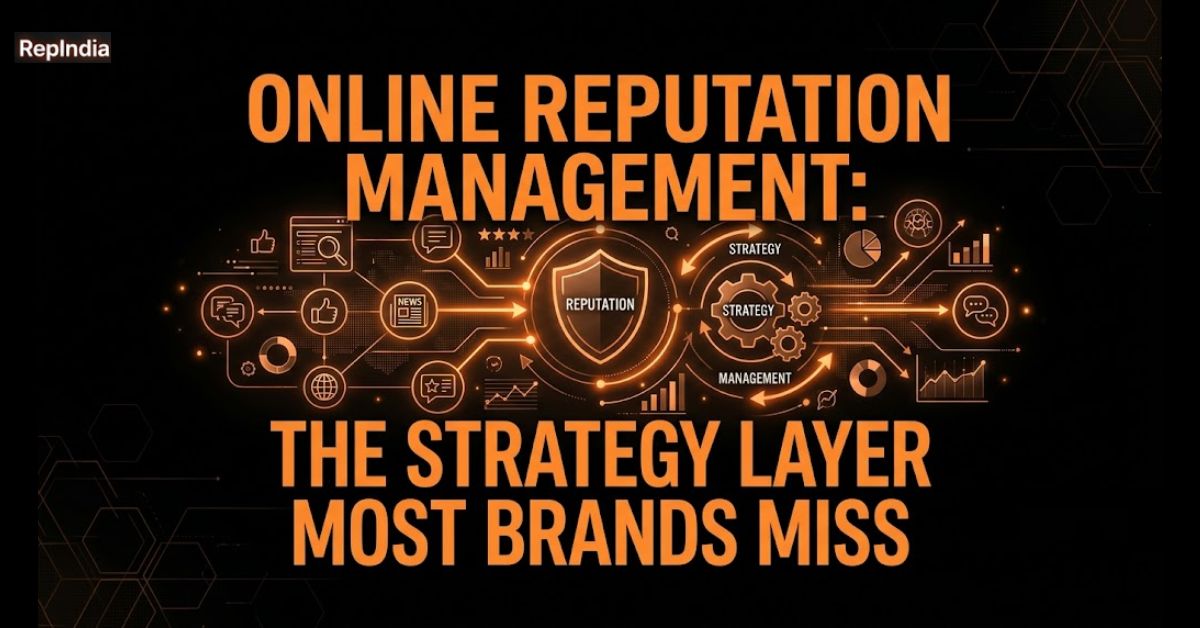
Most brands treat ORM as a reactive function focused on responding to negative feedback. What gets overlooked is that reputation already operates as a strategy layer sitting above search visibility, marketing performance, and conversion behaviour.
This layer quietly influences how users compare options, how search engines interpret credibility, and how quickly traffic turns into conversions.
Without proper structure, every marketing channel ends up working harder than it should.
Reputation is not built in isolated moments. It develops continuously across every digital interaction.
Search engines and users evaluate brands together. A search result does not separate ratings from rankings or reviews from relevance. Everything is read as one combined trust signal.
A structured online review strategy in 2026 depends on how feedback is collected, how consistently it is responded to, and how effectively it is distributed across platforms that influence decisions. Without this structure, reviews exist but fail to influence perception at scale.
When reputation is handled only as response management, its impact on performance becomes inconsistent.
Search engines now rely heavily on behavioural signals such as review consistency, sentiment trends, and brand mentions. When these signals are fragmented, visibility becomes unstable.
The impact is not limited to search rankings. Traffic may remain steady, but conversions drop because trust is not established early in the journey. This increases dependence on paid media and reduces organic efficiency.
Reputation behaves differently across markets because user behaviour and competition intensity vary by region.
In high-density commercial areas like Mumbai, users compare multiple brands within short timeframes. Decisions happen quickly, and reputation signals carry a strong influence.
In such environments, working with an ORM agency in Mumbai becomes important for brands operating in competitive categories where feedback spreads quickly and directly affects choice.
In structured corporate cities like Delhi, reputation plays a stronger role in credibility validation during search-led discovery. Users evaluate trust signals more carefully before engagement.
In such environments, partnering with an ORM agency in Delhi helps align search presence with consistent reputation signals, especially where credibility directly influences conversion outcomes.
Most brands focus on responding to reviews after they appear. A structured ORM approach focuses on how those reviews are created, distributed, and interpreted over time.
A stronger system includes consistent review capture across customer touchpoints, structured response frameworks, tracking sentiment trends instead of isolated feedback, and integrating reputation insights into broader marketing decisions.
This shifts ORM from reactive handling to structured influence.
Reputation does not exist only on review platforms. It spreads across multiple digital environments that influence perception.
Search results, social conversations, forums, blogs, and indirect mentions all contribute to how a brand is viewed. Often, users form opinions even before reaching a review page.
Focusing only on reviews creates a partial view of reputation, which weakens strategic control over perception.
Reputation management becomes critical when performance shifts cannot be explained by marketing or operational changes alone.
Warning signs include declining conversions despite stable traffic, rising acquisition costs without campaign changes, inconsistent reviews across platforms, or negative associations appearing in branded search results.
At this stage, reputation moves from being a brand function to a direct growth factor influencing revenue efficiency.
A structured ORM system focuses on continuity rather than isolated actions. It connects sentiment tracking, review systems, response behaviour, and marketing intelligence into one integrated framework.
We approach ORM as a connected layer that works alongside search, content, and performance strategy. The objective is to ensure reputation actively supports growth instead of reacting after perception has already formed.
This is why the systems we build at RepIndia focus on treating reputation as a structured strategy layer that supports visibility, trust, and conversion together rather than addressing it in isolation.
Reputation is shaped long before a customer interacts directly with a brand. It forms through search results, reviews, and shared experiences that define trust at the earliest stage of discovery.
The gap most brands face is not the lack of ORM activity but the lack of an ORM structure.
Closing that gap requires treating reputation as a strategy layer that influences visibility, trust, and conversion together.
Write a Message