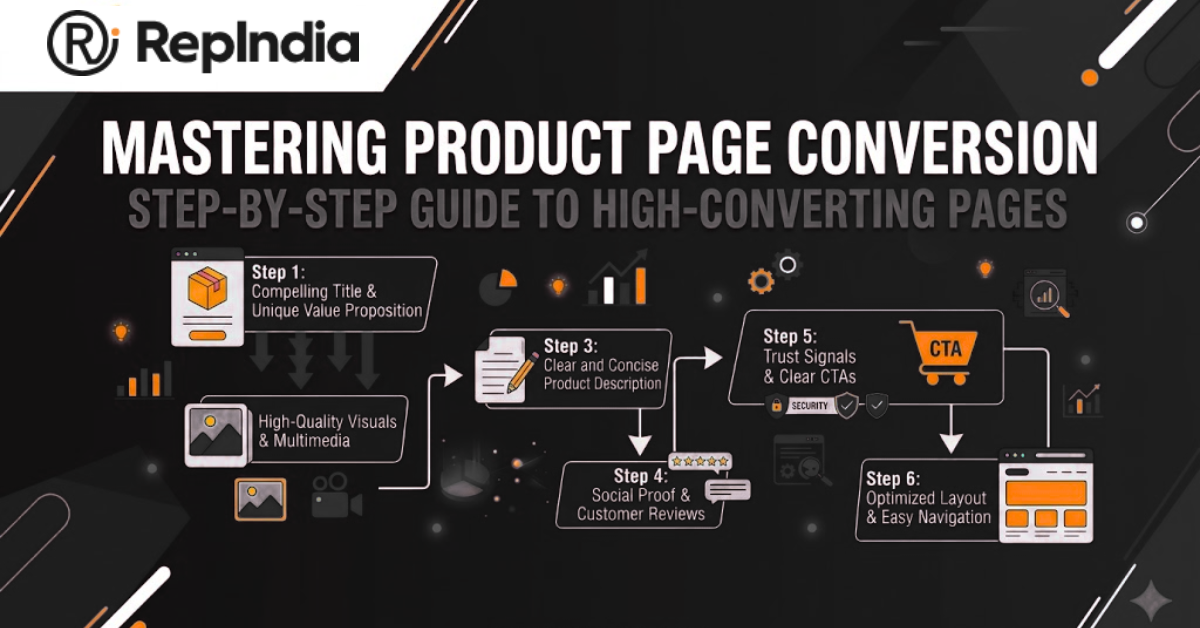
A product page carries one responsibility. It must convince a visitor to become a customer. Strong product page design makes that decision easy and natural. Clear information, trust signals, and a thoughtful layout guide the user toward a purchase.
Effective product page optimisation combines design, content, psychology, and performance. When every section serves a purpose, conversion rates improve, and customer confidence grows.
The title is the first thing visitors notice. It should explain exactly what the product is shortly and directly. Vague titles confuse customers and increase bounce rates.
A strong title includes the product type, key features, and, when applicable, the brand name. This approach helps customers understand the product instantly and improves search visibility. Clear product titles also support SEO because relevant keywords help search engines understand the page.
Customers should never need to guess what the product is.
Online shoppers rely heavily on visuals because they cannot physically examine products. Crisp images build confidence and reduce hesitation.
A good product page normally includes:
Detailed visuals help shoppers imagine owning the product. Research shows that high-quality visuals play a major role in influencing purchase decisions on e-commerce websites.
Visual clarity is one of the strongest pillars of effective product page design.
The Add to Cart button should stand out immediately. Visitors should not scroll endlessly to find it.
A strong call to action includes:
Clear calls to action reduce friction and guide visitors toward the next step in the purchase journey. Experts widely consider the CTA the most critical component of a product page because its main goal is to trigger the buying action.
When CTA visibility improves, conversions usually follow.
Product descriptions should explain value in simple language. Customers want to understand how a product helps them.
Good descriptions usually include:
Descriptions should also highlight benefits rather than listing technical details alone. Clear information reduces uncertainty and builds trust with potential buyers.
Effective product page optimisation focuses on removing doubt. Helpful descriptions do exactly that.
Trust is essential in e-commerce. Visitors often hesitate because they cannot see the product in person.
Customer reviews solve this problem.
Product pages should display:
User-generated content and testimonials reassure shoppers that others have already purchased and enjoyed the product. Social proof increases credibility and encourages purchasing decisions.
Real experiences influence buyers far more than marketing claims.
Hidden information creates frustration and cart abandonment.
Customers want to know three things quickly:
Transparent pricing helps shoppers make quick decisions. Clear shipping information reduces uncertainty and improves customer experience on e-commerce stores.
Trust grows when businesses communicate openly.
Online transactions involve sensitive information. Customers look for reassurance before completing payment.
Trust signals may include:
These elements create confidence and reduce hesitation during checkout. Trust badges often play a significant role in improving conversions on e-commerce websites.
Confidence leads directly to purchases.
Many successful e-commerce stores guide customers toward additional products.
Common recommendation sections include:
Recommendation systems help shoppers discover alternatives and increase overall order value. Product recommendation algorithms have been shown to improve conversion performance in large e-commerce platforms.
Small additions like this often create significant revenue growth.
Mobile commerce dominates online shopping today. Product pages must load quickly and remain easy to navigate on small screens.
Mobile optimisation should focus on:
More than half of ecommerce purchases happen on mobile devices, which makes mobile usability a critical factor for conversions.
Every aspect of product page design should prioritise mobile users.
A high-converting product page does not happen accidentally. Clear structure, strong visuals, helpful descriptions, and trust signals all work together to guide visitors toward a purchase.
When each section answers a customer’s question and removes friction from the buying process, conversions improve naturally. That is the goal of effective product page optimisation and thoughtful product page design.
At RepIndia, we help ecommerce brands build product pages that actually convert. Our team studies user behaviour, content structure, and performance data to create pages that encourage confident buying decisions.
If your e-commerce store needs stronger product pages, the right technical foundation matters too. Working with an experienced Shopify development company in Delhi can ensure your store runs smoothly while delivering a seamless shopping experience.
Businesses looking to scale their online stores can also benefit from reliable Shopify development services in India that support growth, speed, and performance.
A well-structured product page can turn casual visitors into loyal customers. If your e-commerce store is ready for stronger conversions, our team at RepIndia is here to help you build product pages that truly perform.
A strong product page should include clear images, a simple product title, price, product description, reviews, and a visible Add to Cart button. These elements help customers understand the product quickly and make a buying decision.
Most e-commerce experts recommend at least 4 to 6 images. Showing different angles, close-ups, and real-life usage helps customers visualise the product and builds confidence before purchasing.
Customer reviews provide real experiences from other buyers. They help new visitors understand product quality and reduce hesitation, which often leads to higher conversions.
Use clear visuals, short descriptions, bullet points, and simple layouts. Adding videos, FAQs, and helpful product details can keep visitors interested and improve their overall shopping experience.
Common reasons include unclear information, slow loading speed, hidden shipping costs, or lack of trust signals. Improving these areas can significantly increase purchase decisions.
ABOUT THE AUTHOR

SEO Strategist & Digital Marketing Expert
Ankit Pokhriyal is an experienced SEO and digital marketing professional with a strong background in driving organic growth for brands across industries. With deep expertise in search engine optimisation, content strategy, and data-driven marketing, he helps businesses improve their online visibility and stay ahead in an ever-evolving search landscape. His work reflects a passion for turning complex SEO insights into actionable strategies that deliver real results.
Write a Message