A single review can influence hundreds of buying decisions. A delayed response to a complaint can spread across platforms within hours. In 2026, customers check ratings, Reddit threads, and even old tweets before choosing a brand.
Trust now builds in public, often without the brand present in the conversation. So, what happens when a misleading review goes viral? How does a brand respond when search results show outdated or negative information?
The urgency becomes clearer when you look at real concerns shaping user behaviour today. 51% of Indians report losing money to a scam, with the average loss being ₹93,915.
This has made people far more cautious about whom they trust online. Before engaging with any business, they actively look for proof such as reviews, responses, and an overall digital presence.
This is where Online Reputation Management (ORM) plays a critical role. An ORM company works to ensure that what people see about a brand online is accurate, credible, and trustworthy.
“Online reputation management” refers to the process of shaping a brand’s public perception across digital platforms. This includes search engines, social media, review sites, forums, and news articles.
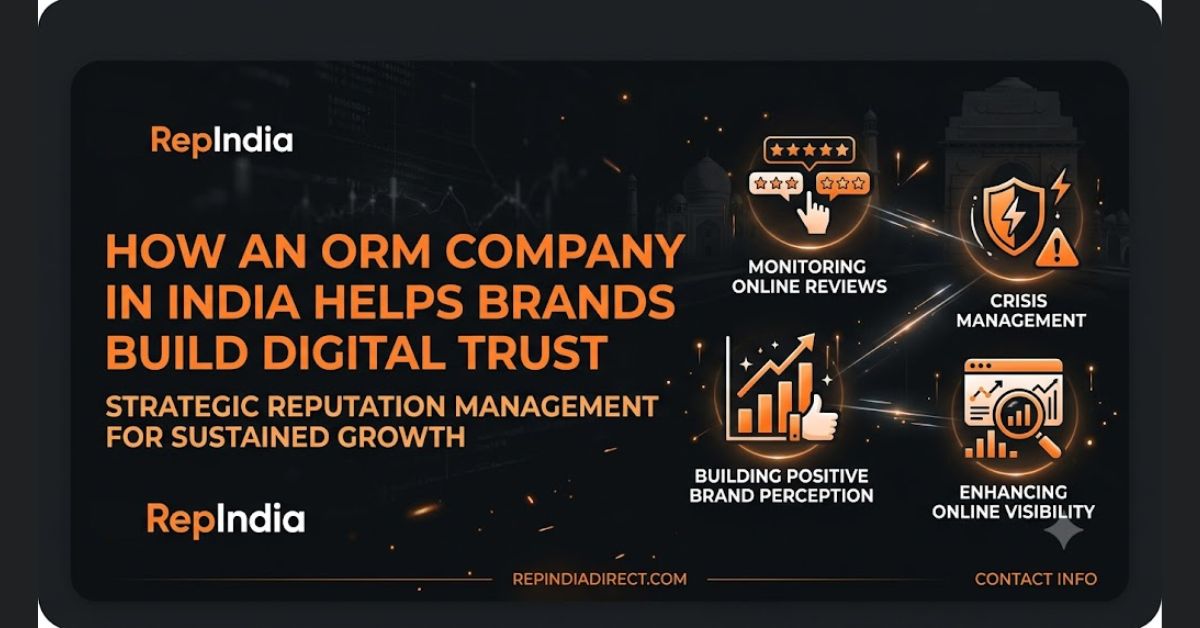
ORM focuses on three key areas: monitoring what people are saying, responding to feedback, and improving the brand narrative.
A common misconception is that ORM is only about removing negative content. In reality, it is about balance and credibility. Customers tend to trust brands that respond openly to criticism and show accountability.
Ignoring feedback often creates more damage than the feedback itself.
An ORM company in India plays a structured role in managing digital trust for brands across industries. The approach involves a mix of technology, content strategy, and human judgement.
Trust builds over time through consistent actions. ORM plays a direct role in shaping this trust.
Consistency Across Platforms:
Customers expect the same tone and messaging across all channels. ORM ensures that communication remains aligned, reducing confusion and building reliability.
Transparency in Communication:
Acknowledging mistakes and offering solutions builds credibility. Silence or defensive responses often create doubt.
Positive Content Creation:
High-quality content helps in shaping perception. Informative blogs, FAQs, and updates provide clarity and reduce misinformation.
Crisis Management:
Every brand faces challenges. ORM companies prepare response strategies in advance, ensuring that communication during crises remains controlled and clear.
Technology has transformed how ORM functions. Modern ORM tools in 2026 go beyond basic tracking and provide deeper insights.
These tools analyse sentiment, which means they can identify whether a mention is positive, negative, or neutral.
They also predict potential risks by analysing patterns in user behaviour. Automation helps in managing large volumes of data, while dashboards provide a clear overview of brand health.
For example, if a sudden spike in negative mentions appears, the system alerts the team instantly. This allows quick action, reducing long-term impact.
Content plays a strong role in reputation management. Clear, factual, and helpful content builds confidence among users.
Educational Content:
Explaining products, services, and policies in simple language helps customers make informed decisions.
Customer Stories and Testimonials:
Real experiences add authenticity. They act as proof of reliability.
Active Engagement:
Responding to comments, queries, and feedback shows that the brand is listening. This creates a sense of connection with the audience.
Managing online reputation comes with its own set of challenges.
Fake Reviews and Misinformation:
Not all feedback is genuine. ORM teams identify suspicious activity and report it through proper channels.
High Volume of Conversations:
Large brands receive thousands of mentions daily. Technology and structured workflows help in managing this volume efficiently.
Changing Platform Algorithms:
Search engines and social platforms update their algorithms regularly. ORM strategies adapt to these changes to maintain visibility.
Technology supports ORM, but human judgement remains essential. Understanding context, emotion, and intent requires experience.
A simple example: a frustrated customer may use strong language, but the root issue could be a minor service delay. Responding with empathy rather than strict policy can change the entire outcome.
We focus on combining data insights with practical strategies to manage online reputation at RepIndia. The approach centres on understanding brand voice, identifying key risk areas, and building a consistent communication framework.
We analyse current perceptions, set clear goals, and implement structured response systems. Continuous tracking ensures that progress remains measurable and aligned with brand objectives.
ORM success is not limited to removing negative content. It is measured through multiple indicators:
Regular reporting helps brands understand where they stand and what needs improvement.
Digital conversations will continue to grow in volume and speed. Voice search, AI-driven recommendations, and decentralised platforms are shaping how people access information.
ORM will evolve to focus more on predictive analysis. Instead of reacting to issues, brands will work on preventing them. Personalisation will also play a role, as customers expect responses tailored to their specific concerns.
Digital trust is built in small moments: every review, every response, every search result. Customers notice consistency, honesty, and effort. An ORM company helps guide this process, ensuring that a brand’s online presence reflects its actual values.
A strong reputation grows through continuous monitoring, thoughtful communication, and clear intent. In a world where information spreads instantly, managing perception becomes a responsibility that brands need to actively take on.
FAQs:
Write a Message