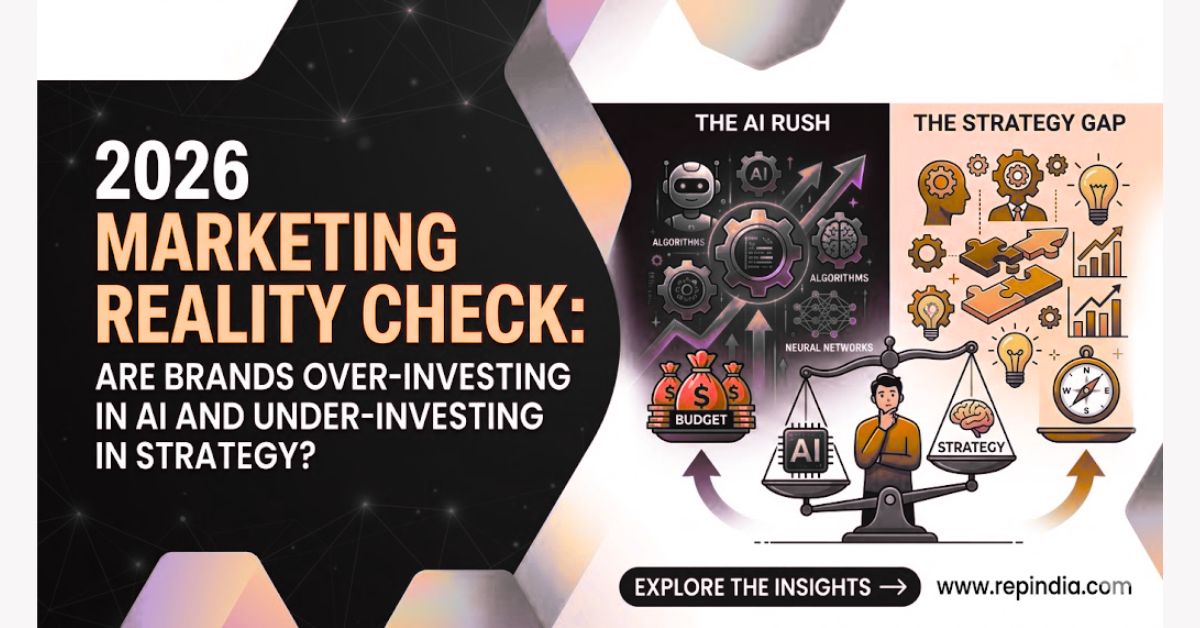
AI has become deeply embedded in marketing operations, shaping how content is produced, campaigns are optimised, and customer behaviour is analysed.
What once required weeks of effort can now be executed in hours, and marketing budgets increasingly reflect this shift towards speed and efficiency. Tools are added with confidence, dashboards expand, and teams are encouraged to move faster with every quarter.
Despite this progress, many brands heading into 2026 are facing an uncomfortable reality. Output has increased significantly, but direction often feels unclear.
Engagement struggles to grow at the same pace as activity, and differentiation becomes harder as more brands rely on similar technologies.
A lack of capability does not drive this gap, but rather an imbalance between technology adoption and strategic clarity.
Most organisations did not introduce AI through a clearly articulated long-term plan. Tools were adopted to solve immediate challenges such as faster content creation, improved targeting, or more detailed reporting, and each decision appeared sensible at the time.
Over months and years, these decisions accumulated into complex marketing stacks that looked advanced but lacked a unifying point of view.
AI performs exceptionally well when instructions are clear. It identifies patterns, improves efficiency, and scales execution. It does not define brand purpose, audience priority, or long-term ambition.
Those responsibilities sit firmly within strategy, and when they are not clearly defined, technology ends up amplifying confusion rather than resolving it.
AI has made it possible for brands to publish content at a scale that was previously unrealistic. Blogs, social posts, ads, and landing pages are produced continuously, yet much of this content follows similar structures, tones, and ideas.
As a result, brands often sound interchangeable even when they are highly active.
Audiences respond to clarity and relevance, not volume. A strong digital marketing strategy for 2026 defines why content exists, who it serves, and what role it plays within the larger brand narrative.
AI should support those decisions by improving consistency and speed, rather than dictating what gets published. Without that hierarchy, marketing becomes louder without becoming stronger.
The expansion of AI-driven analytics has given marketers access to an unprecedented volume of data. Performance metrics, behavioural insights, and predictive indicators are now updated constantly across platforms.
Despite this, many teams feel less confident in decision-making than before.
Campaigns often shift direction in response to short-term signals, and long-term objectives struggle to maintain focus. Data explains what happened. Strategy explains what deserves attention.
Clear strategic thinking allows teams to prioritise meaningful signals, connect insights to business outcomes, and avoid reacting to every fluctuation. Without this filter, even the best tools create urgency without direction.
AI promised personalised experiences at scale, yet much of what exists today feels predictable and transactional. Audiences recognise automation quickly, and when relevance feels forced, trust weakens.
True personalisation requires an understanding of motivation, intent, and context, which starts with research and human insight rather than software.
Strategy defines where personalisation adds genuine value and where it risks becoming intrusive. AI executes within those boundaries. As brands plan for 2026, thoughtful restraint will matter as much as technological sophistication.
Investment patterns highlight the issue clearly. Spending on tools continues to rise, while time and resources dedicated to research, planning, and alignment are often reduced under pressure to deliver quick results. This imbalance directly affects outcomes.
Brands with clear positioning and strategic focus use AI effectively. Brands without that clarity rely on technology to compensate.
We at RepIndia regularly work with organisations that already have advanced tools in place but lack alignment across teams, channels, and objectives.
Our work typically begins with stepping back, rebuilding clarity, and establishing direction before scaling execution. This is where an experienced digital marketing agency delivers its greatest value, not through adding platforms but through strengthening foundations.
AI works best within clear boundaries. Strategy defines direction, tone, and limits, while technology supports execution, optimisation, and scale within those limits.
This balance protects brand identity, keeps creativity grounded in human understanding, and ensures decisions remain intentional rather than reactive.
Marketing success in 2026 depends far more on clarity than capability. It belongs to those who use the right tools with purpose.
Marketing leaders need to pause before approving the next platform. Existing stacks should be reviewed honestly, systems that add activity without impact should be removed, and attention should return to audience understanding, positioning, journey design, and measurement frameworks.
These investments deliver long-term value that no tool can replace.
Partner choice plays a critical role in this reset. The best digital marketing agency in India will challenge assumptions, prioritise sustainable growth, and help brands build systems that scale with clarity rather than complexity.
We believe strong marketing starts with clear thinking, and at RepIndia, our focus remains on aligning technology with business intent and creativity with insight.
If your marketing relies heavily on AI but lacks clear direction, the issue is strategy, not technology. Pause new tool investments, review what already exists, and rebuild clarity around audience, positioning, and priorities. AI should support decisions, not drive them.
This is where the right digital marketing agency makes the difference. If you are looking for the best digital marketing agency in India, work with a team that leads with strategy and uses AI to scale outcomes, not confusion.
Our team at RepIndia can help your brand reset its marketing foundations and turn AI into a real growth advantage. Start with strategy, then scale with confidence.
Write a Message